

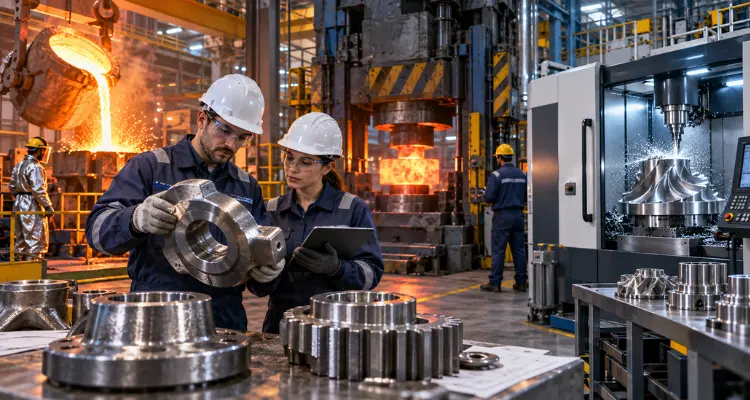
Quality Management Software for Metal, Casting, Forging & Machining Companies
Metal manufacturing, foundry, forging, fabrication, and machining companies operate in quality-sensitive environments where process discipline, inspection records, supplier control, customer audits, training evidence, and corrective action closure directly affect delivery performance and customer trust.
When quality records are managed through spreadsheets, shared folders, paper checklists, and manual follow-ups, teams lose visibility over open findings, document revisions, training gaps, supplier issues, and plant-level risks.
AURA helps Quality Managers, Compliance Managers, Internal Auditors, ISO Consultants, Plant Heads, Production Leaders, Supplier Quality Teams, and Engineering Teams manage critical quality workflows from one centralized QMS platform.
With AURA, your team can manage process audits, supplier audits, plant audits, controlled documents, training records, CAPA actions, quality tasks, dashboards, and role-based workflows in one connected system.
Built for metalworking and precision manufacturing teams that need stronger audit readiness, better document traceability, faster corrective action closure, and real-time quality visibility without relying on disconnected trackers.
Metal Manufacturing Quality Requires Strong Control Across Process, People, and Evidence
Metal, casting, forging, and machining companies work with demanding customer specifications, process parameters, supplier inputs, heat treatment records, machining tolerances, inspection results, calibration evidence, operator competency, and recurring customer audit requirements.
Quality teams must maintain control across departments such as production, quality assurance, quality control, maintenance, stores, procurement, supplier quality, engineering, dispatch, and plant operations.
Typical quality records may include:
- Internal audit schedules
- Process audit checklists
- Supplier audit reports
- Work instructions
- Inspection formats
- Quality manuals
- SOPs
- Customer audit evidence
- Non-conformance records
- CAPA records
- Training records
- Calibration-related evidence
- Supplier corrective action records
- Plant-level quality reports
Many companies still manage these records through Excel sheets, email approvals, shared drives, printed documents, manual training registers, and department-wise files.
This creates risk when a customer, auditor, certification body, or plant leadership team asks for quick evidence of document history, operator training, audit closure, supplier action status, or corrective action effectiveness.
AURA helps metal and precision manufacturing teams move from fragmented quality control to a centralized, traceable, and audit-ready QMS workflow.
Common Quality Challenges in Metal, Casting, Forging & Machining
Process audits are difficult to standardize
Foundry, forging, machining, and fabrication processes often involve multiple stages, machines, shifts, inspection points, and control parameters. When each department uses different audit formats or manual checklists, it becomes difficult to compare findings, track repeated issues, and enforce consistent controls.
Document control gaps create production risk
Teams depend on approved SOPs, work instructions, drawings, inspection formats, control plans, quality manuals, process sheets, job setup instructions, and customer-specific documents.
If an outdated procedure or uncontrolled inspection format is used, it can lead to rework, rejection, customer complaints, or audit observations.
Training records are difficult to prove across shifts
Operators, inspectors, supervisors, machine setters, maintenance teams, and auditors need role-based training. This may include SOP training, inspection method training, safety training, process-specific awareness, customer requirement training, and quality system training.
Manual registers make it difficult to prove training completion during audits.
CAPA closure is delayed after non-conformances
Casting defects, forging variations, machining errors, inspection failures, customer complaints, supplier issues, and audit findings require root cause analysis, corrective action, evidence, closure review, and effectiveness checks.
Without a structured workflow, CAPA follow-up becomes dependent on repeated reminders.
Supplier quality records are scattered
Metal manufacturing depends on raw material suppliers, foundries, machining vendors, forging partners, heat treatment vendors, coating suppliers, calibration agencies, transport partners, and outsourced process providers.
Supplier audits, supplier approvals, corrective actions, and quality records can become fragmented without centralized tracking.
Customer audit preparation takes too much time
Customers often ask for evidence related to audit history, process controls, training records, document revisions, inspection records, supplier quality, corrective actions, and management review inputs.
When this evidence is spread across departments, audit preparation becomes reactive and stressful.
Plant heads lack real-time quality visibility
Leadership needs to know which audits are pending, which CAPA actions are overdue, which documents need approval, which training gaps exist, and which supplier actions remain open.
Manual reporting often provides this information after delays have already affected quality performance.
Quality systems become person-dependent
If audit history, document status, CAPA progress, supplier follow-ups, and training evidence are known only to a few people, the organization becomes vulnerable during employee turnover, customer audits, and plant expansion.
How AURA Supports Metal, Casting, Forging & Machining Teams
AURA brings audit management, document control, training management, CAPA, task tracking, assessments, dashboards, and reporting into one centralized QMS platform.
Instead of managing quality workflows through separate spreadsheets, emails, folders, and registers, AURA helps teams create a connected workflow where records, responsibilities, approvals, actions, and evidence are easier to control.
Centralized Audit Management
Plan, schedule, assign, conduct, track, and close internal audits, process audits, supplier audits, plant audits, customer audits, and compliance assessments.
AURA helps teams manage audit checklists, findings, observations, non-conformances, evidence, assigned owners, and closure status.
Controlled Document Management
Manage SOPs, quality manuals, work instructions, inspection formats, process sheets, forms, templates, supplier documents, and controlled records with version control, approval workflows, access permissions, archiving, and document history.
Training Management
Assign and track training based on role, department, process, document update, audit finding, customer requirement, or compliance need.
This helps quality teams prove that employees are trained on current and approved procedures.
CAPA and Task Tracking
Convert audit findings, inspection failures, supplier issues, customer complaints, and process non-conformances into corrective actions with owners, due dates, priority, evidence requirements, escalation visibility, and closure tracking.
Supplier Quality Visibility
Manage supplier audit schedules, supplier findings, corrective action follow-ups, approval evidence, and supplier-related quality records from one system.
Real-Time Dashboards
Give Quality Heads, Compliance Managers, Plant Heads, Production Leaders, and Supplier Quality Teams visibility into open audits, overdue CAPA actions, pending document approvals, training gaps, supplier actions, and quality task status.
Role-Based Access
Give users access based on responsibility. Quality teams, auditors, document owners, training coordinators, department heads, plant leadership, supplier quality users, and auditees can work within controlled permissions.
Mobile Accessibility
Support plant-level follow-ups, distributed teams, and multi-location operations with mobile-friendly access where applicable. This helps users review tasks, respond to actions, and access quality information more efficiently.
Workflow Automation
Automate reminders, approvals, audit assignments, CAPA follow-ups, document review alerts, training notifications, escalations, and reporting workflows to reduce repetitive manual coordination.
Key AURA Features for Metal, Casting, Forging & Machining
| AURA Capability | Practical Benefit for Metal Manufacturing Teams |
|---|---|
| Audit Management | Plan audits, assign auditors, record findings, track non-conformances, manage evidence, and close audits systematically. |
| Document Management | Control SOPs, work instructions, inspection formats, quality manuals, forms, process documents, and supplier records with version history and approvals. |
| Training Management | Assign and track training based on roles, departments, SOP updates, process changes, audit findings, and customer requirements. |
| CAPA Management | Track root cause, corrective actions, preventive actions, responsible owners, due dates, evidence, and closure status. |
| Supplier Audit Management | Manage supplier audits, supplier findings, corrective action responses, and supplier quality follow-up activities. |
| Customer Audit Management | Organize customer audit evidence, findings, assigned actions, process records, and closure reports. |
| Assessment Management | Create process checklists, plant assessments, clause-based reviews, supplier evaluations, and quality inspections. |
| Task Management | Assign quality actions to responsible users and monitor progress across departments, plants, and suppliers. |
| Dashboards & Reports | View audit progress, overdue CAPA, pending tasks, document status, training gaps, supplier follow-ups, and plant quality activity. |
| Role-Based Access | Control who can create, review, approve, edit, close, or view quality records. |
| Customizable Workflows | Configure workflows around plants, departments, processes, audit types, document categories, approval levels, and customer requirements. |
| Mobile-Friendly Access | Support plant-level follow-ups, distributed users, and faster response to quality actions. |
Business Benefits
- Stronger audit readiness: AURA helps teams organize audit schedules, checklists, evidence, findings, CAPA actions, document references, training records, and closure reports in one place.
- Better document and revision control: Metalworking teams can reduce the risk of outdated procedures, uncontrolled inspection formats, missing approvals, and unclear revision history.
- Faster corrective action closure: Automated reminders, task ownership, dashboards, and evidence tracking help reduce delays in CAPA completion.
- Improved training compliance: Training records can be connected to roles, departments, SOP updates, process changes, customer requirements, and audit findings.
- Better supplier quality control: Supplier audits, supplier findings, corrective action responses, and approval evidence can be managed in a structured and traceable workflow.
- Reduced manual workload: Quality teams spend less time chasing updates, preparing reports, searching for records, and reconciling spreadsheets.
- Clearer plant-level visibility: Plant Heads and Quality Leaders can monitor audits, CAPA, training, document approvals, supplier actions, and compliance activity through real-time dashboard views.
Why Metal, Casting, Forging & Machining Companies Choose AURA
Unified Audit + Document + Training Platform
Many quality risks occur because audits, documents, training records, supplier actions, customer audit records, and CAPA are managed separately.
AURA connects these areas so teams can trace quality activity from an audit finding or supplier issue to CAPA, document update, training assignment, and closure evidence.
ISO-Focused Workflows
AURA supports ISO-driven and compliance-heavy environments with structured audit planning, clause-based assessments, document control, training evidence, CAPA tracking, supplier audit workflows, dashboards, and audit-ready records.
Practical for Plant and Production Teams
Metalworking environments need systems that support daily operations without slowing production. AURA is designed to reduce manual follow-ups and help users work with assigned tasks, checklists, reminders, dashboards, and centralized evidence.
Customizable for Process and Customer Requirements
Every metal manufacturer has its own processes, machines, inspection methods, supplier base, approval hierarchy, document categories, customer requirements, and audit calendar.
AURA can be configured around your internal quality workflow.
Scalable for Multi-Plant Operations
AURA supports growing manufacturers that need centralized quality visibility across plants while maintaining department-wise and location-wise accountability.
Affordable and ROI-Focused
AURA is suitable for companies that want better audit control, document traceability, training compliance, supplier quality visibility, and CAPA discipline without heavy implementation complexity.
Standards and Compliance Areas Relevant to Metal Manufacturing
Metal, casting, forging, machining, fabrication, and precision manufacturing companies may operate under different quality, environmental, occupational safety, customer, and sector-specific requirements depending on their products, customers, geography, and certification scope.
AURA supports the workflows needed to manage audits, documents, training evidence, CAPA, supplier follow-ups, task ownership, dashboards, and compliance records.
ISO 9001
ISO 9001 is the core quality management system standard for organizations that need consistent processes, customer satisfaction, documented information control, internal audits, corrective actions, and continual improvement.
AURA can support ISO 9001-oriented workflows by helping teams manage audit schedules, controlled documents, training records, findings, corrective actions, dashboard visibility, and evidence-based quality reviews.
ISO 14001
Metalworking, foundry, forging, and machining operations may need environmental management controls for waste, emissions, coolant disposal, energy use, material handling, and customer environmental expectations.
AURA can support related audits, document control, training records, corrective actions, and task follow-ups.
ISO 45001
Metal manufacturing environments require disciplined occupational health and safety practices around machines, furnaces, forging equipment, lifting activities, sharp tools, heat exposure, and shopfloor risks.
AURA can support safety-related audit records, training evidence, corrective action tracking, document workflows, and department-level follow-ups where OH&S workflows are part of the organization’s scope.
ISO 19011
ISO 19011 provides guidance for management system auditing. It is relevant for companies building structured internal audit programs, audit plans, auditor responsibilities, evidence collection, and audit reporting practices.
IATF 16949, AS9100, or Customer-Specific Requirements
Metal and machining suppliers serving automotive, aerospace, defence, rail, industrial equipment, or export customers may need to maintain additional quality evidence based on customer or sector requirements.
AURA can help organize audit workflows, controlled documents, training records, CAPA actions, supplier records, and customer audit evidence. However, product conformity, material traceability, PPAP, FAIR, lab testing, calibration systems, and ERP/MES records should be managed according to the organization’s approved system scope.
How Metal Manufacturing Teams Can Use AURA
Step 1: Define the quality scope
Identify plants, departments, processes, suppliers, audits, documents, training requirements, and reporting needs.
Step 2: Configure users and responsibilities
Assign Quality Managers, auditors, document owners, training coordinators, department heads, supplier quality owners, reviewers, and approvers.
Step 3: Create audit programs
Set up internal audits, process audits, plant audits, supplier audits, customer audit preparation, and ISO compliance assessments.
Step 4: Select checklists and templates
Use standardized checklists for casting, forging, machining, fabrication, inspection, document control, training compliance, supplier quality, and CAPA follow-up.
Step 5: Conduct audits and capture findings
Record observations, non-conformances, risks, evidence, responsible owners, target dates, and supporting comments.
Step 6: Assign CAPA and quality tasks
Define root cause, corrective action, owner, due date, priority, evidence requirement, and closure status.
Step 7: Link controlled documents
Attach or reference SOPs, work instructions, inspection formats, quality manuals, supplier documents, training records, previous audit reports, and customer audit evidence.
Step 8: Assign training where required
Trigger training when a document is revised, a process changes, an audit finding identifies a knowledge gap, or a customer requirement needs awareness.
Step 9: Monitor dashboards
Track audits, pending actions, overdue CAPA, document approvals, training completion, supplier follow-ups, and plant-wise quality activity.
Step 10: Review effectiveness and retain evidence
Verify whether corrective actions addressed the root cause, then retain audit reports, CAPA records, document references, training evidence, and supplier quality records for future audits.
Manual Process vs Other Software vs AURA
| Area | Manual Process | Other Standalone Software | AURA |
|---|---|---|---|
| Process Audits | Excel schedules, paper checklists, manual coordination | May support audit scheduling but may not connect with documents and training | Centralized audit planning, checklists, assignments, findings, CAPA, reminders, and closure records |
| Supplier Quality | Supplier records kept in folders, emails, or separate files | Supplier tracking may be limited or disconnected | Supplier audits, findings, corrective actions, and supplier quality follow-up records |
| Document Control | Shared folders, printed copies, email approvals, unclear revision history | May store documents but may not connect them with training and audit workflows | Version control, approval workflows, access permissions, document history, and audit linkage |
| Training Records | Paper attendance sheets, HR files, department-wise registers | Training tracking may not link to SOP updates or audit findings | Training assignments and completion tracking linked to roles, departments, documents, and compliance needs |
| CAPA Tracking | Manual registers and email follow-ups | CAPA may exist as a separate module | Findings, root cause, corrective action, evidence, task ownership, and closure tracking in one workflow |
| Customer Audit Preparation | Evidence collected manually before customer visits | Evidence may be stored module by module | Centralized evidence across audit, document, training, supplier quality, CAPA, and task workflows |
| Plant Visibility | Manual reports prepared after data collection | Limited or module-specific dashboards | Real-time visibility across audits, tasks, documents, training, suppliers, and CAPA |
| Role-Based Access | Folder permissions and informal controls | Basic user access | Access based on role, department, location, and responsibility |
| Workflow Automation | High dependency on manual reminders | Automation varies by vendor | Reminders, approvals, escalations, assignments, document review alerts, and reporting workflows |
| Best Fit | Small teams with low compliance complexity | Companies needing one isolated function | Metal, casting, forging, and machining teams needing unified Audit + Document + Training Management |
FAQ
Bring Audit Readiness and Plant Quality Control Into One QMS Platform
If your metal, casting, forging, or machining team is still managing audits, controlled documents, supplier follow-ups, training records, customer audit evidence, and CAPA through spreadsheets or disconnected systems, AURA can help you move to a more controlled and audit-ready workflow.
With AURA, your team can centralize quality records, automate follow-ups, improve document traceability, track training completion, close corrective actions faster, and give leadership real-time visibility into quality performance.
Book a personalized AURA demo for your metal manufacturing quality team.

