

Introduction
In regulated industries, quality teams usually have to carry out complex audit, documentation, and training tasks across various departments. It becomes difficult to maintain compliance visibility when these processes rely on spreadsheets, emails, and manual follow-ups.
This case study shows how an organization operating in a compliance-driven environment can move from isolated quality processes to a structured digital workflow by using AURA – Audit, Document & Training Management System.
AURA is designed for mid-sized and large enterprises in the manufacturing, healthcare, pharmaceutical, automotive, and services sectors that need stronger capabilities in ISO compliance, audit control, and training management.
About the Customer
Industry
Manufacturing / Quality-Driven Enterprise
Business Environment
The customer represents a typical mid-to-large enterprise with:
- Multiple departments involved in quality processes
- ISO compliance requirements
- Internal audit responsibilities
- Document-controlled workflows
- Employee training obligations
The primary users include:
- Quality Managers
- ISO Consultants
- Internal Auditors
- Compliance Managers
- Process Owners
Such users usually work in organizations employing 500 to 1,000 or more people, where audit traceability and process consistency are important.
The Business Challenge
Prior to introducing AURA, the organization carried out its key quality activities using manual methods and separate systems.
Audit Tracking Limitations
The coordination required for audit schedules, compliance plans, findings, and follow-ups was entirely manual.
Common issues included:
- Difficulty tracking audit status across departments
- Delayed follow-ups due to manual reminders
- Limited visibility into previous audit records
- Increased dependency on individual team members for information retrieval
Document Control Challenges
Teams required quick access to controlled documents, records, and historical information related to quality activities.
Manual document handling created challenges such as:
- Difficulty maintaining document traceability
- Multiple versions of files
- Time-consuming searches during audits
- Inconsistent document access practices
Training Management Issues
The organization needed structured monitoring of training records and employee competency information.
Without centralized visibility, teams faced challenges in:
- Tracking completed training
- Maintaining evidence records
- Preparing compliance documentation
The problems mentioned above are typical of companies transitioning from spreadsheet-based quality processes to digital compliance systems.
Previous Process vs New Process
| Before Implementation | After AURA Implementation |
|---|---|
| Audit schedules tracked manually | Structured digital audit workflows |
| Documents stored across multiple locations | Centralized document management |
| Manual reminders and follow-ups | Automated notifications and alerts |
| Limited compliance visibility | Real-time dashboards and reporting |
| Audit history difficult to retrieve | Centralized audit records and traceability |
| Training records maintained separately | Integrated training management workflow |
The Solution Implementation
Why AURA Was Selected
The organization needed a system capable of supporting complete quality workflows rather than just offering separate tools.
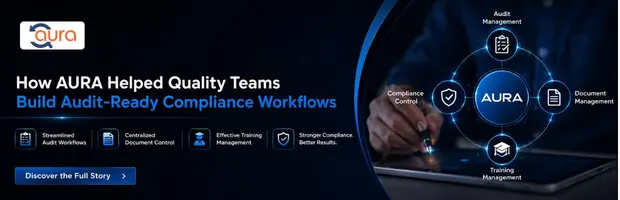
AURA provided a unified platform combining:
- Audit Management
- Document Management
- Training Management
It enabled quality teams to carry out their activities across the entire process, from planning to closure, through structured workflows.
Key Features Implemented
- Digital Audit Management
The organization moved from manually tracking audits to using a controlled audit workflow.
Improvements included:
- Audit planning
- Schedule management
- Finding tracking
- Closure monitoring
- Audit history visibility
- Centralized Document Control
AURA allowed teams to maintain controlled access to quality documents and records.
Key improvements included:
- Better document traceability
- Easier retrieval during audits
- Improved version control
- Automated Notifications and Reminders
Rather than depending on manual follow-ups, teams could use automated alerts to support timely actions.
This reduced the need for individual tracking and increased accountability.
- Compliance Dashboards and Reporting
Clause-level dashboards and customizable reports provided greater visibility into quality activities.
Instead of gathering compliance data manually, teams could make decisions based on consolidated compliance information.
Results and Business Impact
The implementation led to tangible improvements in processes.
Operational Improvements
The organization achieved:
- Improved visibility across audit activities
- Better coordination between departments
- More structured compliance workflows
- Reduced manual effort in tracking activities
Quality Management Improvements
AURA helped establish:
- Stronger audit traceability
- Better ownership of compliance tasks
- Faster access to quality information
- More consistent workflow execution
Verified Metrics
For this case study, no specific return on investment figures, percentage improvements, or cost savings were provided.
For customer-specific reporting, recommended metrics include:
- Reduction in audit preparation time
- Reduction in document retrieval time
- Improved visibility into training completion
- Reduction in overdue compliance actions
- Improvement in audit closure cycle time
Key Benefits Achieved
- Centralized management of audits, documents, and training records
- Automated scheduling, reminders, and workflow notifications
- Improved compliance visibility through dashboards
- Better audit readiness and traceability
- Reduced dependency on spreadsheets and manual tracking
- Improved collaboration between quality teams and departments
The emphasis AURA places on automation, customization, role-based access, and scalable pricing helps organizations looking for practical digital quality transformation adopt the system.
Lessons Learned
Digital Transformation Should Begin With a Clear Understanding of Workflows
Value is achieved only when quality processes, ownership, and approval procedures are clearly defined while replacing spreadsheets with software.
Being Audit-Ready Depends on Having Traceability
Besides document storage, quality teams need visibility into:
- Who completed an action
- When it was completed
- What evidence supports compliance
Simpler Systems Encourage Faster User Adoption
Solutions based on quality team workflows create less resistance and support better adoption.
AURA supports this through:
- Role-based access
- Customization options
- User-friendly workflows

