

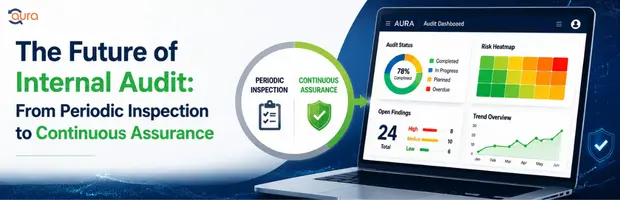
AURA Quality Management is highlighting an increasing trend in the way enterprise quality management is being carried out: a shift from conducting periodic internal audits to implementing continuous audit assurance. The company believes that quality and compliance teams should have better visibility between audit cycles by connecting findings, corrective actions, evidence, documents, and operational risk indicators.
This change is especially important for companies operating in regulated industries, such as manufacturing, healthcare, pharmaceuticals, automotive, engineering, and other fields where compliance requires continuous traceability and audit readiness as part of everyday business operations.
About the Announcement
In the past, internal audit has been based on fixed review cycles. Teams create audit plans, conduct assessments, gather evidence, record findings, and monitor corrective actions.
Although this model remains important, many businesses are now facing a new challenge: operational risk is changing faster than traditional audit schedules can identify.
A process can become inconsistent even after an audit has been completed. If a document is revised, new employee training may be required. A corrective action may remain open longer than expected. The repeated occurrence of a particular issue could indicate a broader weakness in the process.
These risks often emerge gradually.
AURA believes that businesses should improve visibility between audits by treating audit information, compliance evidence, corrective actions, and process performance data as connected business intelligence rather than separate records.
Why This Matters
The role of internal audit is changing.
Historically, audits were generally viewed as a way to check whether processes followed established requirements. Today, organisations expect the audit function to provide insights into operational risk, governance effectiveness, and opportunities for continuous improvement.
Continuous audit assurance supports this shift by helping organisations answer questions such as:
- Which processes are showing repeated weaknesses?
- Where are corrective actions slowing down?
- Which departments require additional attention?
- Are updated documents aligned with employee readiness?
- Does management have current visibility into risks?
For enterprise leaders, the value lies not only in better audit preparation but also in improved decision-making.
A high-quality function that can detect emerging risks earlier will be better positioned to support operations, reduce unnecessary compliance exposure, and strengthen organisational resilience.
Key Highlights
- Internal audit is moving from periodic inspections toward continuous assurance.
- Organisations are increasingly connecting audit findings, CAPA workflows, document control, training records, and compliance evidence.
- Digital audit workflows improve visibility into audit progress, ownership, and corrective-action status.
- Audit planning can become more risk-based by using continuous assurance rather than depending only on fixed audit calendars.
- Internal auditors can spend more time analysing risk patterns and supporting process improvement.
- Quality leaders gain stronger visibility into compliance performance across departments and locations.
Industry Context
Regulated industries are facing increasing expectations around traceability, evidence management, accountability, and operational transparency.
Manufacturing companies, healthcare providers, pharmaceutical firms, and other regulated businesses now operate across multiple departments, facilities, suppliers, and geographical locations. As a result, maintaining process consistency and ensuring that required evidence is available when needed has become more challenging.
Meanwhile, internal audit functions are becoming more closely connected with enterprise risk management. Traditional methods of reviewing selected processes at regular intervals are increasingly being supported by technology-enabled monitoring approaches.
The Institute of Internal Auditors views internal auditing as a function that strengthens governance, risk management, and control processes. Continuous assurance supports this broader role by enabling auditors to gain faster insight into organisational risk.
For quality leaders, this means audit should not be viewed only as an event. It should become part of an ongoing quality and compliance management system.
Expert Perspective
Suggested direction:
Continuous assurance enables quality teams to understand risk conditions before those conditions become audit findings. The aim is not to replace internal audits but to strengthen them by providing better visibility, more effective evidence management, and better-informed decision-making.
From an industry perspective, the future of internal audit will depend on how effectively organisations can connect information across different quality functions.
Audit findings provide only part of the picture. By combining them with CAPA performance, document changes, training completion, and process-level trends, organisations can gain a clearer understanding of where improvement efforts should be focused.
This reflects a wider shift in quality maturity—from simply maintaining records to using quality information as a strategic management resource.
What Continuous Audit Assurance Requires
An effective approach to continuous assurance requires several organisational capabilities.
Connected Audit Information
Audit plans, checklists, findings, corrective actions, and supporting evidence should be connected rather than maintained in separate systems.
Strong Evidence Management
Audit evidence must be accessible, traceable, up to date, and linked to the relevant process or requirement.
Corrective Action Visibility
CAPA management should focus not only on closure but also on effectiveness and preventing recurring issues.
Cross-Functional Ownership
Quality, operations, IT, and business teams should work together to ensure that audit results lead to meaningful process improvements.
Management-Level Reporting
Managers need visibility into risk patterns, not only completed audit activities.
About AURA Quality Management
AURA Quality Management provides digital quality management software designed to help organisations manage audits, documents, training, assessments, tasks, dashboards, supplier activities, and compliance workflows.
The platform supports organisations operating in quality-driven and regulated environments that require greater visibility, traceability, and control over enterprise quality processes. AURA’s intended users include quality leaders, compliance managers, internal auditors, CIOs, and operations executives.
FAQs

